Patient Guide
Deep Brain Stimulation (DBS) Patient Guide
A complete, step-by-step checklist to help patients and caregivers prepare for and recover from DBS surgery.
Deep Brain Stimulation Journey
Undergoing DBS is a multi-step clinical process rather than a single surgery. We break down the phases below so you know what to expect during each stage of your treatment journey.
DBS Patient Journey Checklist
Phase 1: Pre-Surgical Screening
This outpatient phase takes 1-2 days to confirm if you are a good candidate for DBS:
- Levodopa Challenge Test: Assesses motor function off and on medication to confirm dopamine responsiveness.
- Neuropsychological Assessment: Screens for cognitive decline, depression, or mood changes.
- High-Resolution Brain MRI: Used to map target brain structures.
Phase 2: The Surgical Procedure
DBS surgery is typically performed in two separate stages:
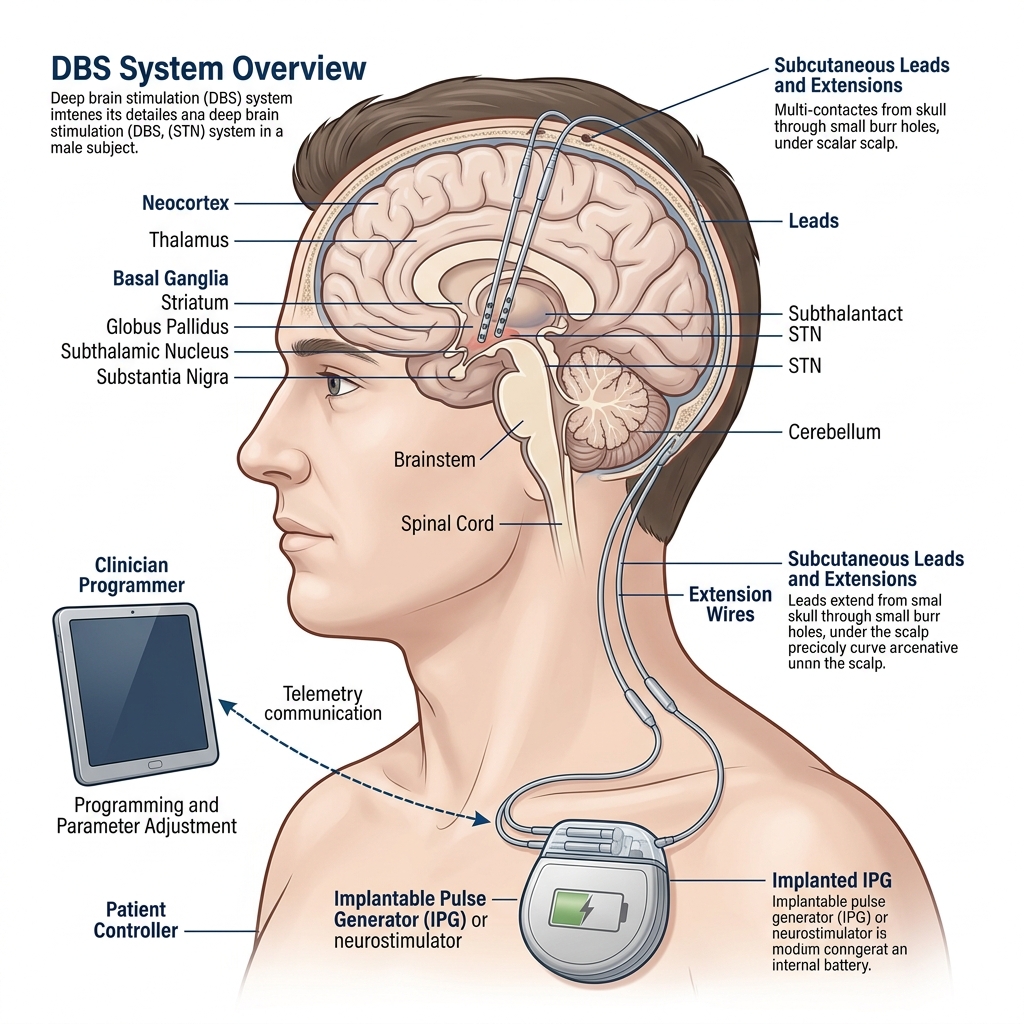
- Stage 1 (Brain Lead Placement): The surgeon places electrodes in the target area under local anesthesia, allowing you to remain awake to help verify stimulation effects.
- Stage 2 (Pulse Generator Placement): Performed under general anesthesia. The surgeon runs an extension wire under the skin to connect the brain leads to the generator implant (IPG) placed in the chest.
Phase 3: Initial Programming & Optimization
Stimulation begins 2-4 weeks after surgery, once swelling has resolved:
- Device Activation: The stimulator is turned on in our clinic, starting with low settings.
- Programming Adjustments: Over several follow-up visits, we adjust settings (voltage, pulse width, frequency) to find the best settings for you.
- Medication Adjustments: As the stimulator settings are optimized, we gradually adjust your Parkinson's medications, often reducing daily dosages by 30% to 50%.